How airlines are rethinking disruption recovery as a strategic advantage—not just an operational necessity.
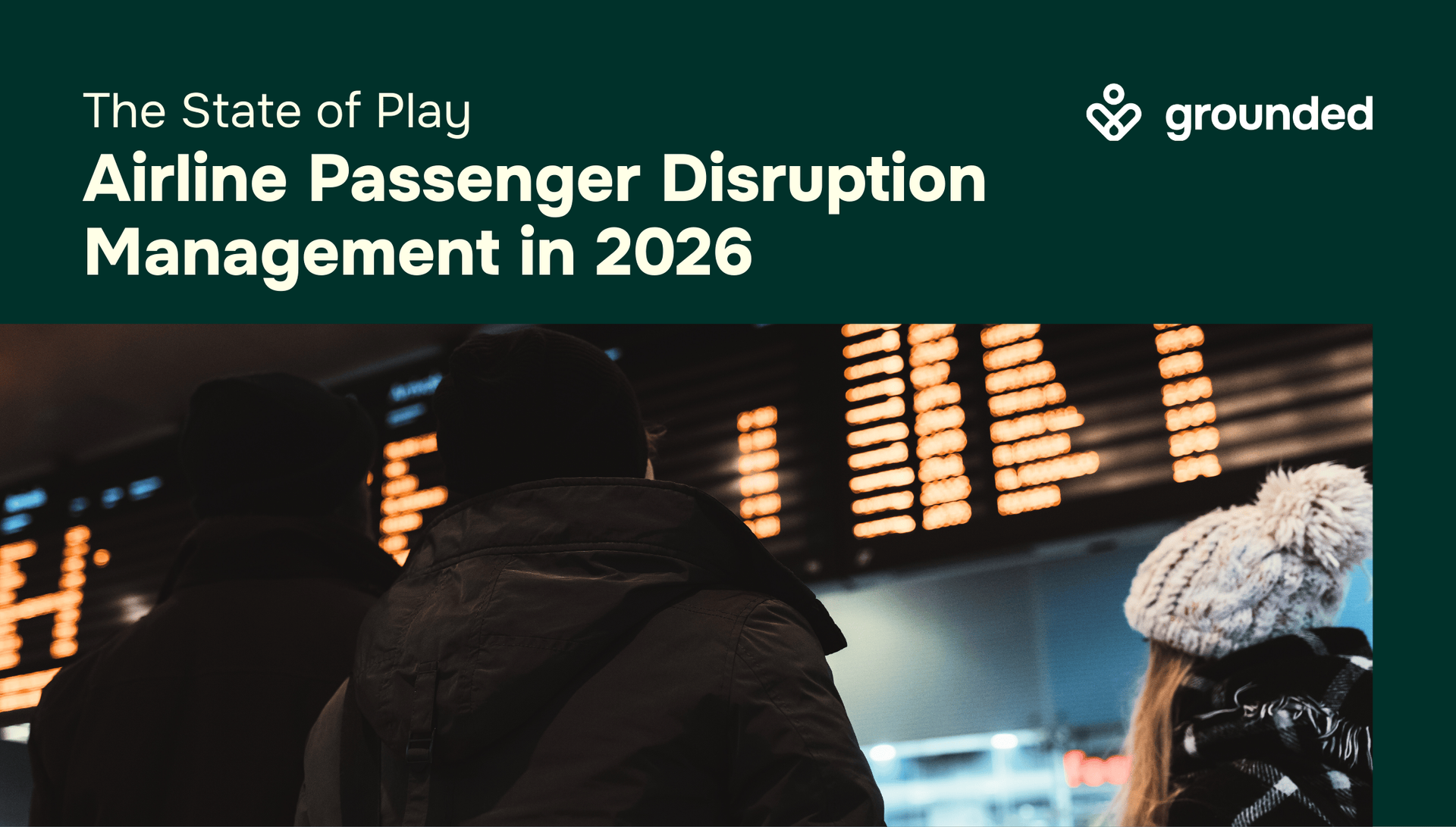
This is The Airline Perspective and it is the first part of a series called The State of Play, taken from a keynote delivered at Grounded, 2025.
Disruption Recovery Is Becoming a Competitive Advantage
Airlines are under immense pressure during disruption—balancing operational demands with the need to care for passengers in their most stressful moments. Across the industry, disruption management is no longer viewed as a back-office function; it’s becoming a defining competitive advantage.
And the biggest breakthroughs aren’t coming from sweeping overhauls—they’re coming from small insights. A single data signal, a subtle behavioral pattern, a moment of clarity in the chaos can completely reshape how an airline recovers from disruption. These micro-insights are proving to be the levers that unlock faster recovery, stronger loyalty, and a smoother experience for both passengers and staff.
After more than 200 global airline engagements, one thing is clear: every carrier wants to do better. Legacy giants, low-cost disruptors, regional specialists—everyone is chasing the same goal. Disruptions hit trust, reputation, and cost, and no airline can afford to stand still.
Where New Entrants Hold an Advantage
Younger airlines often benefit from the freedom to build their systems from the ground up. Without the burden of legacy infrastructure, they can choose providers, craft customer experiences, and design tech stacks with the passenger journey as the central blueprint. This customer-first architecture gives them a natural advantage in modern disruption management.
That said, even with this flexibility, new entrants must still navigate strict regulatory and compliance requirements, integrate with industry partners who may rely on older technologies, and invest meaningfully to ensure their modern systems scale effectively as the operation grows.
Why Legacy Systems Both Help and Hinder
Legacy systems have real strengths: they’re stable at scale, deeply battle-tested, and tightly aligned with decades of regulatory and operational requirements. But the same systems that keep airlines running reliably are also some of the biggest barriers to progress. Outdated architecture limits what airlines can deliver, widening the gap between customer expectations and operational reality. And traditional RFP processes often reinforce those constraints—shaping solutions around internal limitations instead of what passengers actually need.
Transformative improvement requires inverting the process: beginning with a rigorous examination of the passenger experience, then challenging providers to meet those expectations. Without this shift, airlines risk delivering incremental change instead of industry-shaping innovation.
Fragmentation: The Industry’s Most Common Pain Point
One of the industry’s most widely shared frustrations is the fragmentation of disruption response. Ownership of the disruption journey is frequently split across operations, customer service, commercial teams, and finance. This siloed architecture leads to:
- Disconnected passenger experiences
- Limited personalization
- Gaps in real-time visibility
The absence of a single source of truth
Without unified operational views, both passengers and staff remain stuck in a reactive cycle. This environment creates what many describe as the “anxiety dead zone”—the information vacuum where passengers feel most stressed, often regardless of actual resolution times.
What Other Industries Teach Us About Visibility
Domino’s: Transparency Reduces Anxiety
Domino’s transformed customer expectations with a simple idea: show people exactly where their order is. The Pizza Tracker didn’t make ovens faster or drivers quicker, yet complaints plummeted. Customers felt informed, respected, and reassured. Transparency alone—without operational change—proved powerful enough to reshape how people experienced waiting.
Uber: Clarity Reduces Cancellations
Uber demonstrated a similar effect in mobility. By improving real-time ride visibility and offering clearer updates throughout shared trips, cancellations dropped significantly. The ride wasn’t faster—the uncertainty was. Giving riders accurate ETAs, driver location, and status updates increased trust and reduced frustration, proving that clarity can meaningfully change behavior.
The Lesson for Airlines
The message is clear: visibility can be as impactful as speed. Even micro-updates during disruptions can materially improve passenger sentiment, regardless of whether the underlying operational timeline changes.
Why Passenger Disruption Management Needs a Clear Definition
A surprising finding is that Passenger Disruption Management (PDM) lacks a universally accepted definition. Depending on the airline, it may include:
- Passenger and crew management
- Ground transport and accommodation
- Delay communications and voucher distribution
- Rebooking and reaccommodation workflows
This variability makes it harder for airlines to benchmark performance, for vendors to innovate effectively, and for regulators to establish meaningful standards. Aligning the industry around a shared definition could enable more consistent improvement, clearer expectations, and stronger passenger outcomes.
A Working Definition for the Industry
Passenger Disruption Management encompasses all actions an airline takes to support passengers before, during, and after a disruption. This includes real-time communication, rebooking and reaccommodation, onward travel and welfare services, policy application, and coordination across operations, customer service, airports, and partners. Its purpose is to turn an unavoidable operational issue into a managed, transparent, and empathetic customer experience.
Why Disruption Management Will Define the Customer Experience in 2026
The industry stands at a pivotal moment. Passenger expectations continue to rise, shaped by seamless digital experiences in other sectors. Airlines can no longer afford to treat disruptions as isolated operational issues—they are critical moments of truth that can either repair or erode trust.
Airlines that lead the way will:
- Use data to anticipate passenger needs and personalize recovery
- Integrate systems to eliminate silos and streamline workflows
- Communicate clearly and transparently in real time
- Treat disruptions as opportunities to build stronger customer relationships
Conclusion: Turning Disruption Into Opportunity
The drive to improve is universal, and so are the obstacles: fragmentation, legacy systems, and the absence of a shared definition. The opportunity lies in identifying the subtle yet powerful insights within disruption data—the small signals that can unlock disproportionate value.
By embracing these insights and moving toward greater standardization, airlines can turn disruptions from operational burdens into opportunities for loyalty-building, customer-centric innovation. In a world where the passenger journey is increasingly shaped by real-time expectations, carriers that master the nuances of disruption management will gain a decisive competitive edge.
Want to Be Part of the Future of Disruption Management?
Join us at Grounded 2026
📍
Reykjavik, Iceland Sept. 2–3
💡
150+ airline leaders. Real-world case studies. Workshops. Zero Exhibitors.
MEDIA